


Enterprise Architecture (EA) serves as the foundational blueprint for how organizations design, plan, and execute their digital strategies. In 2024, the landscape has shifted dramatically. It is no longer enough to create static diagrams and file them away in a repository. The modern enterprise demands agility, integration, and a deep understanding of how technology serves business value. For beginners entering this field, understanding the current trajectory is essential for professional growth and organizational impact.
This guide explores the critical shifts defining Enterprise Architecture today. We will examine the move from static planning to dynamic execution, the role of artificial intelligence, the decentralization of data, and the imperative of security. By the end of this reading, you will have a clear picture of the skills and concepts required to navigate the modern architectural environment.
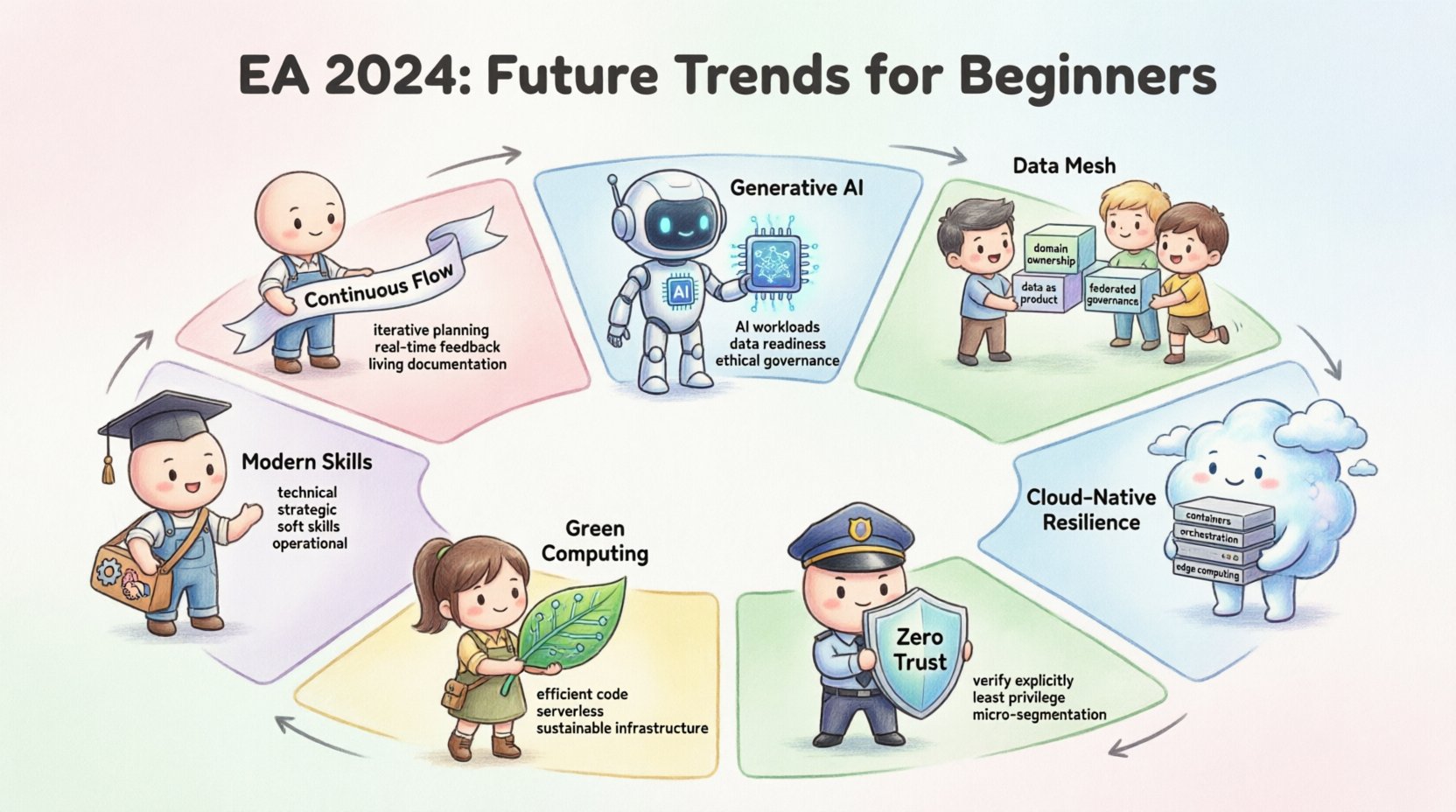
1. From Blueprint to Continuous Flow 🔄
Traditionally, Enterprise Architecture was viewed as a periodic exercise. Teams would gather, define a target state, and produce a set of diagrams. Years would pass before these diagrams were revisited. In 2024, this model is obsolete. The business environment changes too rapidly for static blueprints to remain relevant.
Modern architecture focuses on continuous alignment. This means:
- Iterative Planning: Architecture is now an ongoing process rather than a one-time project. Plans are reviewed and adjusted quarterly or even monthly.
- Real-Time Feedback: Data from operations feeds directly back into architectural decisions. If a service fails or a bottleneck occurs, the architecture reflects that reality immediately.
- Living Documentation: Documentation is maintained in sync with the systems it describes. Outdated diagrams are considered a risk rather than a deliverable.
For a beginner, this shift requires a change in mindset. You are not just drawing boxes; you are managing a living system. The goal is to ensure that the technology stack evolves in lockstep with business requirements without causing disruption.
2. Generative AI as an Architectural Partner 🤖
Artificial Intelligence is no longer a buzzword; it is a core component of the technological infrastructure. However, the conversation has moved beyond “using AI” to “architecting for AI.” This distinction is crucial for enterprise architects.
When designing systems today, you must account for:
- AI Workloads: Training and inference models require specific compute resources, storage speeds, and network latency profiles. Standard infrastructure often cannot support these demands.
- Data Readiness: AI models are only as good as the data they consume. Architecture must ensure data is clean, accessible, and governed across the enterprise.
- Ethical Governance: As AI makes decisions, architects must design guardrails. This includes logging mechanisms, bias detection, and human-in-the-loop controls.
Furthermore, AI tools are beginning to assist architects in their own work. Automated code analysis and pattern recognition can help identify technical debt or security vulnerabilities faster than manual review. Beginners should familiarize themselves with how these tools integrate into the development lifecycle.
3. Data Mesh and Decentralized Ownership 🗂️
The centralized data warehouse model is facing challenges in the age of big data and real-time analytics. Data Mesh has emerged as a significant trend, promoting a decentralized approach to data architecture. This concept treats data as a product, owned by the domain teams that generate it.
Key principles of Data Mesh include:
- Domain Ownership: Business units are responsible for their own data quality and availability. This reduces bottlenecks associated with a central data team.
- Data as a Product: Data is packaged and delivered with clear documentation, SLAs, and usability standards, similar to software products.
- Self-Serve Infrastructure: A foundational platform provides the tools for domains to manage their data without needing deep technical expertise.
- Federated Governance: Global standards exist, but they are applied flexibly to allow local autonomy.
For beginners, understanding this shift is vital. It changes how you design interfaces and APIs. Instead of building a single point of access, you are designing a network of interoperable data products. This requires a strong focus on standardization of protocols and metadata.
| Feature | Monolithic Approach | Decentralized (Data Mesh) |
|---|---|---|
| Ownership | Central IT Team | Domain Business Units |
| Responsibility | Data Quality is IT’s job | Data Quality is Domain’s job |
| Scalability | Limited by central resources | Scales with domain growth |
| Innovation Speed | Slower due to dependencies | Faster due to autonomy |
| Governance | Centralized Control | Federated Control |
4. Cloud-Native and Hybrid Resilience ☁️
The migration to the cloud is complete for many organizations, but the strategy has evolved. We are no longer just asking “where does this run?” but “how does it run across environments?”. Hybrid and multi-cloud strategies are now standard to avoid vendor lock-in and ensure resilience.
Architectural considerations in this space include:
- Polyglot Persistence: Using different database technologies for different needs within the same system. No single tool fits every use case.
- Containerization: Moving away from virtual machines to containers allows for greater portability across cloud providers.
- Orchestration: Managing complex clusters of containers requires robust orchestration platforms that can handle scaling and failure recovery automatically.
- Edge Computing: Processing data closer to where it is generated reduces latency. Architecture must account for connecting edge devices securely to central systems.
Beginners should understand that “cloud” is not a single destination. It is a spectrum of services. The architect’s job is to place workloads where they perform best, whether that is on-premises, in a public cloud, or at the edge.
5. Security by Design and Zero Trust 🔒
Security can no longer be an afterthought or a final gate before deployment. In 2024, it must be integrated into the architecture from the first line of code. The Zero Trust model assumes that no user or device is trustworthy by default, regardless of their location.
Core tenets of Zero Trust architecture include:
- Verify Explicitly: Always authenticate and authorize based on all available data points.
- Use Least Privilege Access: Limit user access with Just-In-Time and Just-Enough-Access (JIT/JEA) principles.
- Assume Breach: Minimize blast radius and segment access. Assume that threats are already present.
- Micro-segmentation: Isolating workloads so that if one is compromised, the attacker cannot move laterally through the network.
For architects, this means designing systems with identity management at the core. Every API call, every database query, and every service-to-service communication must be validated. This adds complexity but is necessary for protecting sensitive enterprise data.
6. Sustainable Architecture and Green Computing 🌱
Environmental impact is becoming a metric of success for technology organizations. “Green IT” is shifting from a corporate social responsibility initiative to a core architectural constraint. Energy consumption, carbon footprint, and hardware efficiency are now part of the non-functional requirements.
Strategies for sustainable architecture include:
- Efficient Code: Optimizing algorithms to reduce CPU cycles and memory usage directly lowers energy consumption.
- Serverless Computing: Running code only when needed ensures resources are not wasted on idle servers.
- Data Lifecycle Management: Archiving or deleting data that is no longer needed reduces storage requirements and energy use.
- Hardware Refresh Cycles: Planning for longer hardware lifecycles and efficient recycling reduces electronic waste.
Architects must evaluate the carbon intensity of the regions where they host their data. Some cloud regions rely more heavily on renewable energy than others. Making informed choices about infrastructure location contributes to the organization’s overall sustainability goals.
7. Skills for the Modern Architect 🎓
The skill set required for Enterprise Architecture has expanded. Technical proficiency is expected, but soft skills and strategic thinking are equally important. The following competencies are essential for success in 2024.
| Category | Key Skills |
|---|---|
| Technical | Cloud patterns, API design, Security protocols, Data modeling |
| Strategic | Business alignment, Cost optimization, Risk management |
| Soft Skills | Communication, Negotiation, Leadership, Mentorship |
| Operational | DevOps practices, Monitoring, Incident response |
Communication is particularly critical. Architects act as translators between business leaders and engineering teams. You must be able to explain technical debt in financial terms and explain business risks in technical terms.
Final Thoughts on Architectural Evolution 📈
The field of Enterprise Architecture is dynamic and evolving. The trends outlined above represent the current state of the industry, but the pace of change suggests they will continue to mature. For beginners, the key is to remain adaptable. Focus on understanding the principles behind the tools rather than memorizing specific technologies.
Building a resilient, secure, and efficient enterprise requires a holistic view. It requires balancing innovation with stability, and speed with security. By adopting a continuous, data-driven, and security-first approach, architects can ensure their organizations remain competitive in a rapidly changing digital world.
Start by mastering the basics of system design and gradually incorporate these advanced trends into your practice. The journey is long, but the impact of effective architecture is profound.