
Now Reading: Comprehensive Guide to AI-Powered Database Modeling with Visual Paradigm: From Requirements to Production-Ready Schema
-
01
Comprehensive Guide to AI-Powered Database Modeling with Visual Paradigm: From Requirements to Production-Ready Schema


Comprehensive Guide to AI-Powered Database Modeling with Visual Paradigm: From Requirements to Production-Ready Schema
In today’s fast-paced software development landscape, the ability to rapidly translate business requirements into functional, normalized database models is critical. Visual Paradigm, an AI-powered, all-in-one modeling platform, redefines how teams approach database design by seamlessly integrating AI-driven generation, visual modeling, and end-to-end engineering capabilities. This guide walks you through the complete lifecycle—from static requirements to production-ready database schemas—using Visual Paradigm’s cutting-edge tools.
1. From Requirements to Model: AI-Powered Generation
Traditional database modeling often begins with manual analysis and diagramming, a time-consuming and error-prone process. Visual Paradigm eliminates this bottleneck with DB Modeler AI, a suite of intelligent tools that convert plain English into structured, normalized database schemas.
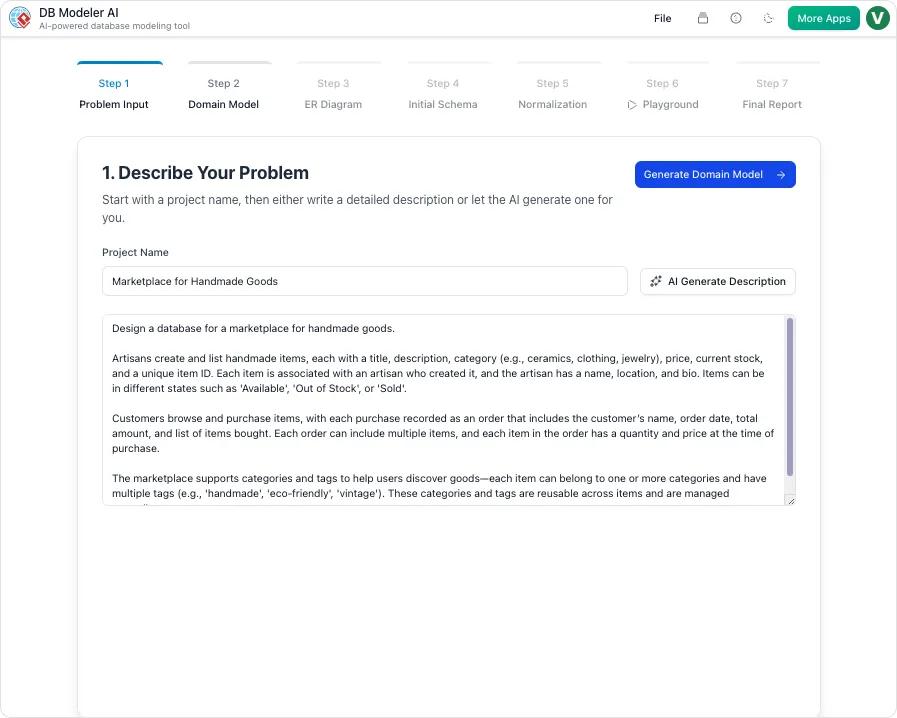
✅ Key Features:
DB Modeler AI: Natural Language to Database Schema
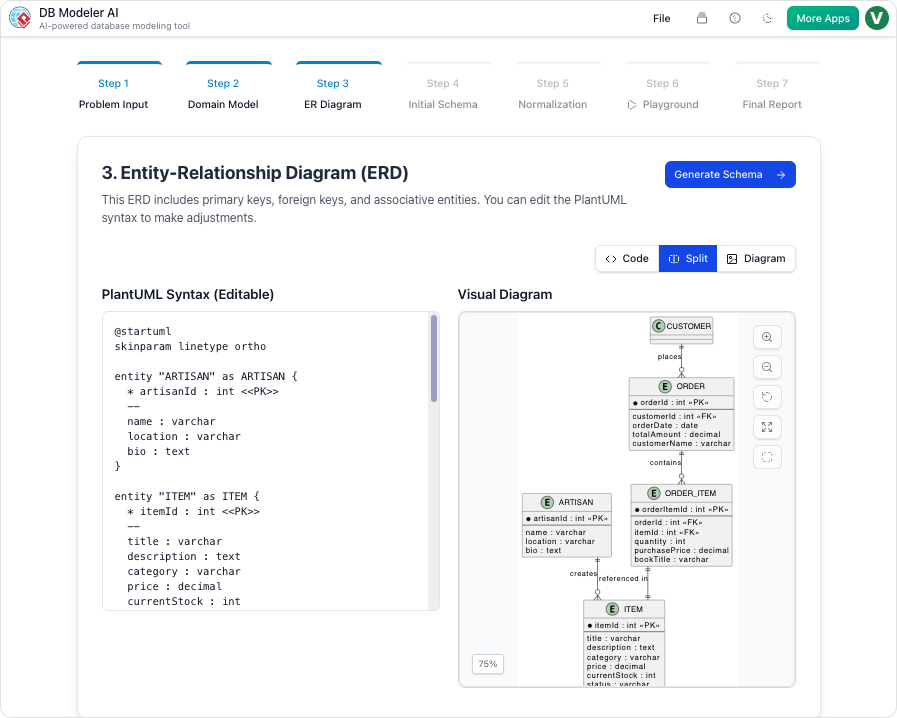
-
Input a simple requirement like “A booking system for a garage that allows customers to schedule appointments, track vehicle maintenance, and manage service history.”
-
DB Modeler AI automatically extracts:
-
Entities (e.g.,
Customer,Vehicle,Appointment,Service) -
Attributes (e.g.,
appointmentDate,vehicleVIN,serviceCost) -
Relationships (e.g., one-to-many between
CustomerandAppointment)
-
-
Outputs a normalized ERD (Entity-Relationship Diagram) compliant with 1NF, 2NF, and 3NF standards.
💡 Example: Type “Create a library management system with books, members, and borrowing records” → Instantly get a fully structured ERD with primary/foreign keys and constraints.
AI Textual Analysis: Extract Domain Logic from Unstructured Text
-
Analyzes documents, user stories, or meeting notes to identify:
-
Domain classes
-
Attributes and data types
-
Associations and cardinalities
-
-
Generates initial UML Class Diagrams or ERDs based on semantic understanding of the text.

AI Diagram Generator: Prompt-to-Professional Diagram
-
Use natural language prompts to generate high-fidelity diagrams:
-
“Generate an ERD for an e-commerce platform with users, products, orders, and payments.”
-
-
Instantly produces clean, industry-standard diagrams without manual layout or element placement.
🔍 Why it matters: Eliminates the need for early-stage brainstorming sessions and reduces design time from days to minutes.
⚠️ Note: While AI is powerful, it may misinterpret ambiguous terms or overlook edge cases. Always validate outputs with domain experts and technical leads.
2. Streamlining the Design Process: “All-in-One” Modeling Features
Visual Paradigm bridges the gap between conceptual modeling, database design, and code generation—enabling a continuous, synchronized workflow across the software lifecycle.
✅ Core Capabilities:
UML to ERD Transformation (One-Click Conversion)
-
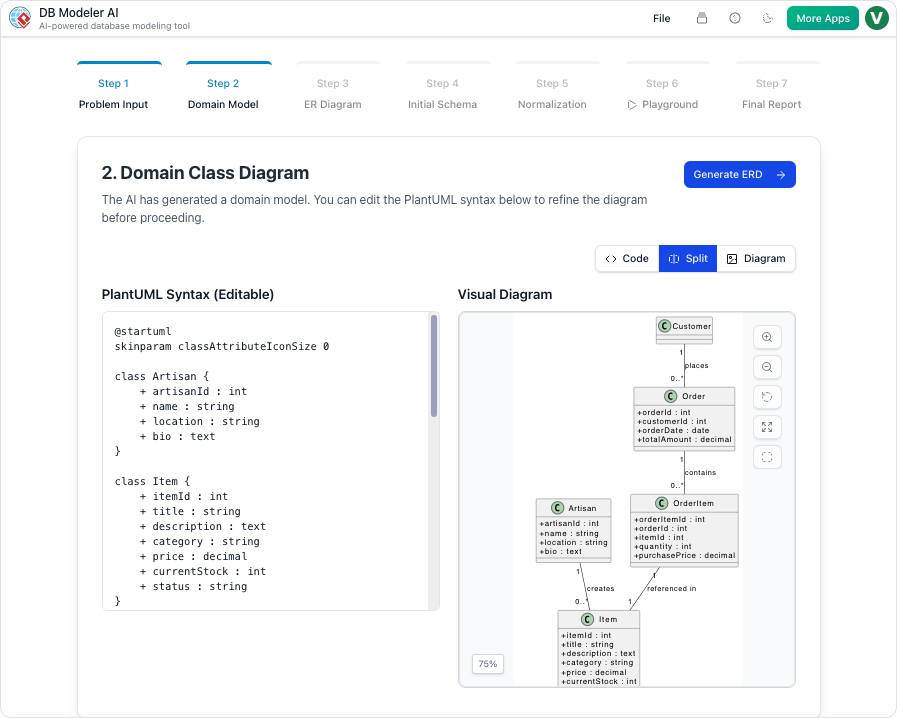
Design your system using
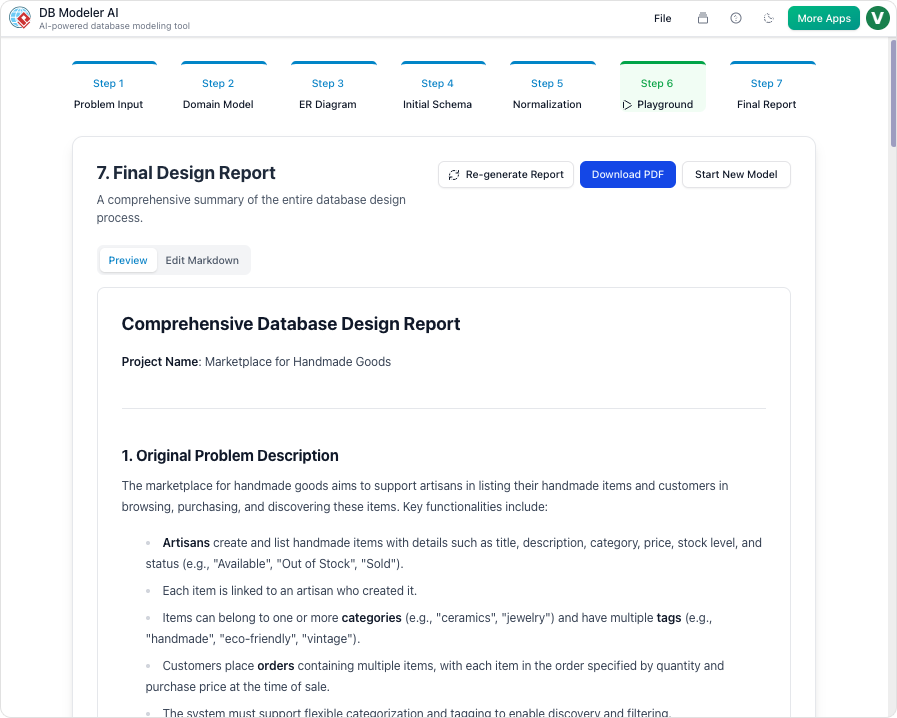
(with classes, attributes, associations).
-
Convert them into logical and physical ERDs with a single click.
-
Automatically maps:
-
Classes → Tables
-
Attributes → Columns
-
Associations → Foreign Keys
-
-
Supports inheritance, composition, and aggregation rules.
ORM & Code Engineering: From Model to Code
-
Maps object-oriented models (e.g., Java classes with Hibernate annotations) to relational schemas.
-
Automatically generates:
-
DDL (Data Definition Language) scripts
-
SQL statements for table creation, indexing, and constraints
-
Persistence layer code (e.g., JPA/Hibernate entities, DAOs)
-
-
Ensures consistency between object models and database structure.
Reverse Engineering: Modernize Legacy Systems
-
Connect to existing databases via JDBC (MySQL, PostgreSQL, Oracle, SQL Server, etc.).
-
Reverse-engineer the database into a visual ERD.
-
Analyze schema structure, identify anomalies, and refactor for better normalization.
-
Ideal for migration projects or when onboarding into existing systems.
Live SQL Playground: Test Before Deployment
-
Built-in browser-based SQL environment for testing schema designs.
-
AI generates realistic sample data based on the schema.
-
Run queries, validate relationships, and simulate real-world usage.
-
Ensures the design is functional and scalable before deployment.
🛠️ Pro Tip: Use the Live SQL Playground to test joins, triggers, and stored procedures during the design phase.
3. Key Benefits for Teams and Organizations
Visual Paradigm doesn’t just speed up modeling—it transforms team collaboration, accuracy, and delivery timelines.
| Benefit | Impact |
|---|---|
| Faster Time-to-Market | Reduce database design time from days to minutes, accelerating project timelines. |
| Improved Accuracy | AI enforces normalization rules and detects common design flaws (e.g., redundancy, poor key selection). |
| Bridging Communication Gaps | Business analysts write requirements in plain language; developers get accurate models. Reduces miscommunication. |
| Seamless IDE Integration | Direct integration with IntelliJ IDEA, Eclipse, and Visual Studio allows: |
-
Auto-sync model changes
-
Generate code directly from diagrams
-
Maintain consistency across design and implementation |
| Version Control & Collaboration | Support for Git integration, team workspaces, and change tracking for enterprise-grade modeling. |
🌐 Use Case Example: A fintech startup uses DB Modeler AI to generate a payment processing schema from a product requirement doc. The team validates it in the Live SQL Playground, reverse-engineers a legacy system for integration, and auto-generates Hibernate code—all within a single day.
4. Best Practices for Maximizing AI Efficiency
While Visual Paradigm’s AI is powerful, best results come from combining AI speed with human oversight.
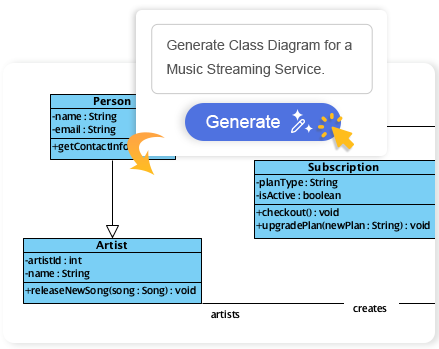
✅ Recommended Workflow:
-
Start with clear, concise requirements (avoid vague language).
-
Use DB Modeler AI to generate a draft ERD.
-
Review and refine the output:
-
Check entity names, attribute types, and relationships.
-
Ensure normalization rules are applied.
-
Add constraints, indexes, and business rules manually.
-
-
Use UML Class Diagrams for complex object models, then convert to ERD.
-
Test in Live SQL Playground with AI-generated sample data.
-
Reverse-engineer legacy databases to understand existing systems.
-
Generate DDL and code for integration with your application stack.
✅ Final Check: Always perform a peer review and validate with stakeholders before finalizing the schema.
Conclusion: Visual Paradigm as an Intelligent Co-Pilot
Visual Paradigm is more than a diagramming tool—it’s an AI-powered co-pilot that guides teams from abstract ideas to production-ready database foundations. By automating repetitive tasks, enforcing best practices, and enabling seamless collaboration across roles, it empowers teams to focus on innovation, not bureaucracy.
Whether you’re building a startup MVP or modernizing a legacy enterprise system, Visual Paradigm accelerates the database modeling process while maintaining quality and consistency.
🚀 Final Thought:
“AI won’t replace developers—but developers who use AI will replace those who don’t.”
— Embrace Visual Paradigm’s AI capabilities to stay ahead in the race for faster, smarter software development.
Reference List (Markdown Format)
Use Case Modeling Studio – Visual Paradigm: An in-depth look at Visual Paradigm’s Use Case Modeling Studio, highlighting its role in creating, managing, and generating use cases with AI assistance.
Comprehensive Guide to Speeding Up Database Modeling with Visual Paradigm (VP) Using AI-Powered Tools: A detailed overview of how Visual Paradigm’s AI tools accelerate database design, including real-world use cases and workflow insights.
Database Design Management with Visual Paradigm – Official Documentation: A comprehensive PDF guide covering database modeling, normalization, and integration with development workflows.
Transforming Model-Driven Architecture: A Guide to AI-Powered Agile Modeling: Explores how AI is reshaping traditional modeling practices, with a focus on Visual Paradigm’s role in agile environments.
DB Modeler AI – Official Feature Page: The official feature description of DB Modeler AI, detailing its capabilities, use cases, and integration with other tools.
AI Diagram Generator – Visual Paradigm Release Notes: Release notes highlighting the launch and evolution of the AI Diagram Generator, including prompt-based diagram creation.
Mastering DB Modeler AI by Visual Paradigm – Medium Article: A step-by-step tutorial on leveraging DB Modeler AI for rapid schema generation and validation.
Visual Paradigm – Database Designers Guide: Mapping Object Models to Data Models: A technical deep dive into ORM mapping, code generation, and model synchronization.
Visual Paradigm – Database Design Management (Overview): A foundational resource on database design principles and how Visual Paradigm supports them.
Benefits of Database Design with Visual Paradigm: A user guide highlighting key advantages, including time savings, accuracy, and team collaboration.
A Comprehensive Guide to Visual Paradigm AI-Powered Modeling for Software and Business: A strategic overview of how AI modeling enhances both technical and business workflows.
Visual Paradigm – Data Modeling Gallery: A curated collection of sample ERDs, UML diagrams, and modeling patterns for inspiration and reuse.
✅ Disclaimer: While AI tools like DB Modeler AI significantly enhance productivity, they are not infallible. Always verify outputs, especially in mission-critical systems. Use AI as a force multiplier, not a replacement for expert judgment.
📘 Ready to Transform Your Modeling Workflow?
👉 Start your free trial of Visual Paradigm and experience AI-powered database modeling firsthand.