
Creating a structured view of an organization’s capabilities is a fundamental step in managing complexity. An enterprise architecture blueprint serves as the master plan that aligns business strategy with operational execution. Without this foundational document, initiatives often drift, leading to redundancy, siloed data, and misaligned technology investments. This guide provides a methodical approach to designing this blueprint, focusing on clarity, sustainability, and strategic value.
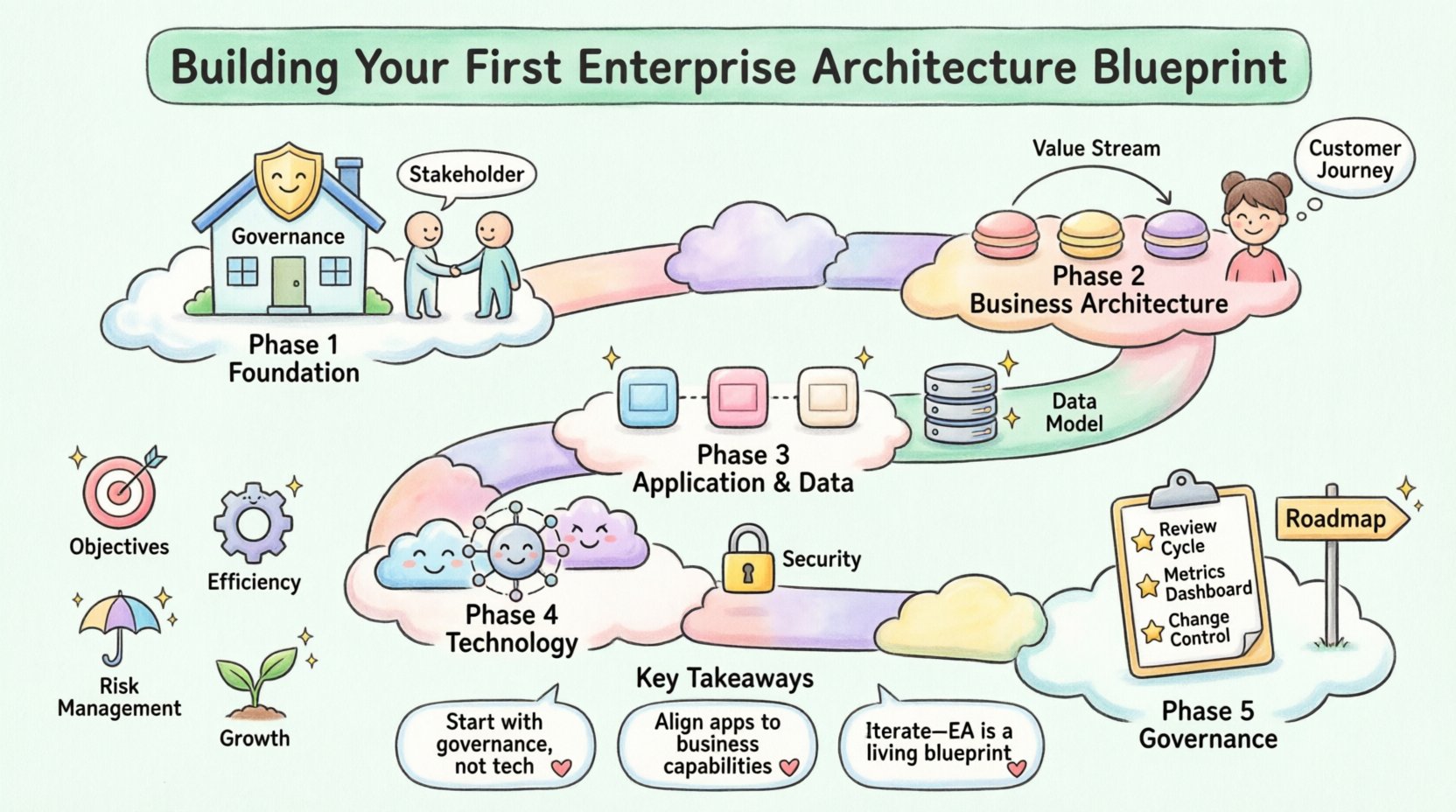
📐 Understanding the Scope and Purpose
Before drawing the first line, it is crucial to define what the blueprint represents. It is not merely a diagram of servers or a list of applications. It is a living representation of how the organization creates value. The scope must be defined early to prevent scope creep.
🎯 Defining the Objectives
Every blueprint initiative must answer specific questions regarding the current state and the desired future state. Common objectives include:
- Strategic Alignment: Ensuring IT investments directly support business goals.
- Operational Efficiency: Identifying redundancies in processes and systems.
- Risk Management: Understanding dependencies and single points of failure.
- Scalability: Designing a structure that accommodates growth without constant re-engineering.
By establishing these objectives, the architecture team gains a clear mandate. This prevents the blueprint from becoming a static artifact that sits unused in a repository.
🧱 Phase 1: Laying the Foundation
The first phase involves gathering the necessary context and establishing the governing principles. This section sets the rules of engagement for the entire project.
📋 Establishing Governance Principles
Principles act as the guardrails for decision-making. They are high-level statements that guide the organization toward its goals. Examples include:
- One Source of Truth: Critical data should be maintained in a single authoritative location.
- Interoperability First: Systems must be designed to communicate via standard interfaces.
- Security by Design: Security controls must be embedded within the architecture, not added as an afterthought.
- Modularity: Components should be loosely coupled to allow independent upgrades.
These principles must be ratified by leadership to ensure they carry weight during resource allocation debates.
🤝 Identifying Stakeholders
Architecture does not exist in a vacuum. It requires input from various domains. Key stakeholders typically include:
- Executive Leadership: Provides strategic direction and budget approval.
- Business Unit Heads: Define operational requirements and pain points.
- IT Operations: Understands infrastructure constraints and maintenance realities.
- Security Teams: Ensures compliance and risk mitigation.
Engaging these groups early fosters ownership. When stakeholders see their input reflected in the blueprint, resistance to implementation decreases significantly.
🏢 Phase 2: The Business Architecture Layer
The business layer is the core of the blueprint. It translates strategy into operational reality. This section maps out what the organization does, not how it does it technically.
🔄 Mapping Business Capabilities
A capability is what an organization does to achieve a specific outcome. Unlike processes, which are specific sequences of activities, capabilities are stable over time. For example, “Order Management” is a capability. “Processing Orders via Email” is a process.
To map these:
- Identify Core Capabilities: List the primary functions that generate revenue or value.
- Categorize Support Capabilities: Identify functions like HR, Finance, and Legal that enable the core.
- Define Relationships: Understand how capabilities interact. Does the “Billing” capability rely on “Credit Verification”?
This map reveals gaps where capabilities are missing or duplicated across departments.
📈 Visualizing Value Streams
Value streams describe the end-to-end flow of activities that deliver value to a customer. They connect the capabilities together. A typical value stream might look like this:
- Customer places an order.
- System validates inventory.
- Warehouse prepares shipment.
- Logistics executes delivery.
- Customer receives goods.
By mapping value streams, you can identify bottlenecks. If a specific step consistently causes delays, the architecture can be adjusted to optimize that flow. This ensures the blueprint drives tangible business improvements.
💻 Phase 3: The Application and Data Layer
Once the business needs are clear, the focus shifts to the systems and information that support them.
📦 Managing the Application Portfolio
This layer catalogs the software systems used to execute business capabilities. The goal is to understand the footprint and health of the portfolio.
- Categorization: Group applications by function (e.g., CRM, ERP, Analytics).
- Dependency Analysis: Identify which applications rely on others. If a legacy system fails, what breaks?
- Lifecycle Status: Tag each application as Active, Maintenance, or Sunset.
- Usage Metrics: Track adoption rates to identify underutilized tools.
A well-maintained portfolio reduces technical debt. It prevents the accumulation of “zombie” applications that consume resources without delivering value.
🗄️ Structuring Information Architecture
Data is the lifeblood of modern enterprises. The architecture must define how information flows and is stored.
- Data Models: Define the relationships between data entities.
- Integration Patterns: Specify how systems exchange data (e.g., APIs, batch transfers, event streams).
- Governance: Establish rules for data quality, ownership, and access.
Clear data architecture ensures that a “Customer” record in the billing system matches the “Customer” record in the support system. This consistency is vital for accurate reporting and customer experience.
🛠️ Phase 4: The Technology and Infrastructure Layer
This layer covers the physical and virtual resources that host the applications and data. It is the foundation upon which the digital experience is built.
🌐 Defining the Technical Standards
To maintain flexibility and reduce vendor lock-in, standards should be defined for:
- Operating Systems: Which platforms are supported for servers and endpoints.
- Cloud Strategy: Decisions on public, private, or hybrid cloud usage.
- Networking: Bandwidth, latency, and security protocols.
- Security Frameworks: Authentication standards and encryption methods.
Consistency in these areas simplifies training, maintenance, and troubleshooting. It allows teams to swap out components without rewriting the entire system.
🏗️ Infrastructure Topology
Visualize how resources connect. This includes data centers, cloud regions, and edge locations. Consider:
- Redundancy: Are there backups in different geographic locations?
- Latency: Where are users located, and where should processing happen to minimize delay?
- Capacity: Does the infrastructure scale to meet peak demand?
A robust infrastructure blueprint ensures that the organization can withstand disruptions and scale efficiently.
📊 Architecture Viewpoints
Different stakeholders require different views of the architecture. A single diagram cannot satisfy everyone. Use the following table to align views with audiences.
| Viewpoint | Primary Audience | Focus Area |
|---|---|---|
| Business View | Executives, Managers | Capabilities, Value Streams, KPIs |
| Application View | Developers, Architects | Systems, Integrations, APIs |
| Data View | Data Engineers, Analysts | Entities, Flows, Models |
| Technical View | Infrastructure Teams | Networks, Servers, Security |
| Security View | Compliance, Risk | Controls, Threats, Policies |
🛡️ Phase 5: Governance and Implementation
A blueprint is useless without a mechanism to enforce it. Governance ensures that new projects adhere to the defined standards.
📝 The Review Process
Establish a formal review board or architecture council. Their responsibilities include:
- Design Reviews: Evaluating proposed solutions against the blueprint.
- Exception Management: Handling cases where standards cannot be met and documenting the risk.
- Compliance Audits: Periodic checks to ensure adherence over time.
This process acts as a quality gate. It prevents ad-hoc solutions that drift away from the strategic plan.
🗓️ Developing the Roadmap
The roadmap translates the blueprint into actionable steps. It prioritizes initiatives based on value and feasibility.
- Quick Wins: Low-effort, high-impact changes to build momentum.
- Strategic Shifts: Major overhauls that align the organization with long-term goals.
- Maintenance: Ongoing upkeep of the existing landscape.
Each initiative should have clear success metrics. This allows the organization to measure the return on investment for the architecture effort.
✅ Blueprint Components Checklist
Before finalizing the blueprint, verify that the following components are present and documented.
| Component | Status | Notes |
|---|---|---|
| Business Capability Map | ☐ | Ensure all core functions are listed. |
| Value Stream Definitions | ☐ | Map end-to-end customer journeys. |
| Application Inventory | ☐ | Include version and lifecycle status. |
| Data Flow Diagrams | ☐ | Highlight sensitive data paths. |
| Infrastructure Topology | ☐ | Document physical and logical connections. |
| Standards & Principles | ☐ | Ensure they are ratified by leadership. |
| Governance Model | ☐ | Define the review board structure. |
⚠️ Common Pitfalls to Avoid
Building an architecture blueprint is challenging. Several common errors can derail the process.
🚫 Over-Engineering
Do not create diagrams for every minor detail. The blueprint should be abstract enough to remain relevant but specific enough to be useful. Focus on the critical paths and high-value areas. Excessive detail leads to maintenance fatigue and rapid obsolescence.
🚫 Siloed Creation
Do not allow the architecture team to work in isolation. If the blueprint is created without input from business leaders or operations, it will likely fail to address real-world constraints. Collaboration is key to adoption.
🚫 Static Documentation
Do not treat the blueprint as a finished project. It is a living document. As the business changes, the blueprint must evolve. Schedule regular reviews to update the state of the architecture.
🚫 Ignoring the Human Element
Architecture is not just about technology; it is about people. Consider the skills of the workforce. If the blueprint relies on skills that do not exist within the organization, it will fail. Include training and hiring plans in the implementation roadmap.
🔄 Continuous Improvement
The final phase of the blueprint process is maintenance. The environment changes constantly, and the blueprint must reflect that reality.
- Feedback Loops: Gather insights from project teams about where the blueprint helped or hindered them.
- Metrics Tracking: Monitor KPIs related to system performance, cost savings, and time-to-market.
- Regular Updates: Schedule quarterly reviews to incorporate new technologies or business shifts.
This continuous cycle ensures the blueprint remains a strategic asset rather than a historical record. It allows the organization to adapt quickly to market changes while maintaining structural integrity.
🔍 Summary of Key Takeaways
Constructing a blueprint requires discipline and a clear vision. It starts with understanding business needs and translates them into technical requirements. By following a structured approach, organizations can reduce complexity and improve agility.
- Focus on Value: Ensure every component of the blueprint supports a business outcome.
- Engage Stakeholders: Build consensus early to ensure adoption.
- Standardize: Establish clear rules to guide decision-making.
- Iterate: Treat the blueprint as a dynamic document that evolves with the business.
The effort invested in this planning phase pays dividends in reduced technical debt and clearer strategic alignment. It provides a shared language for the organization, enabling better communication between business and technology teams. With a solid foundation in place, innovation can proceed with confidence and direction.