


Enterprise architecture (EA) serves as the blueprint for how an organization aligns its business strategy with its technology infrastructure. At the heart of this alignment lies a critical process: mapping the current state to the future state. This transition is not merely about moving from point A to point B; it involves a deep understanding of existing capabilities, identifying gaps, and designing a sustainable path forward. Without a clear map, organizations risk investing in technologies that do not solve business problems or creating systems that cannot scale.
This guide provides a structured approach to understanding, documenting, and executing the transition from an as-is architecture to a to-be architecture. It covers the foundational principles, the analytical methods required for gap analysis, and the governance models necessary to maintain integrity throughout the transformation.
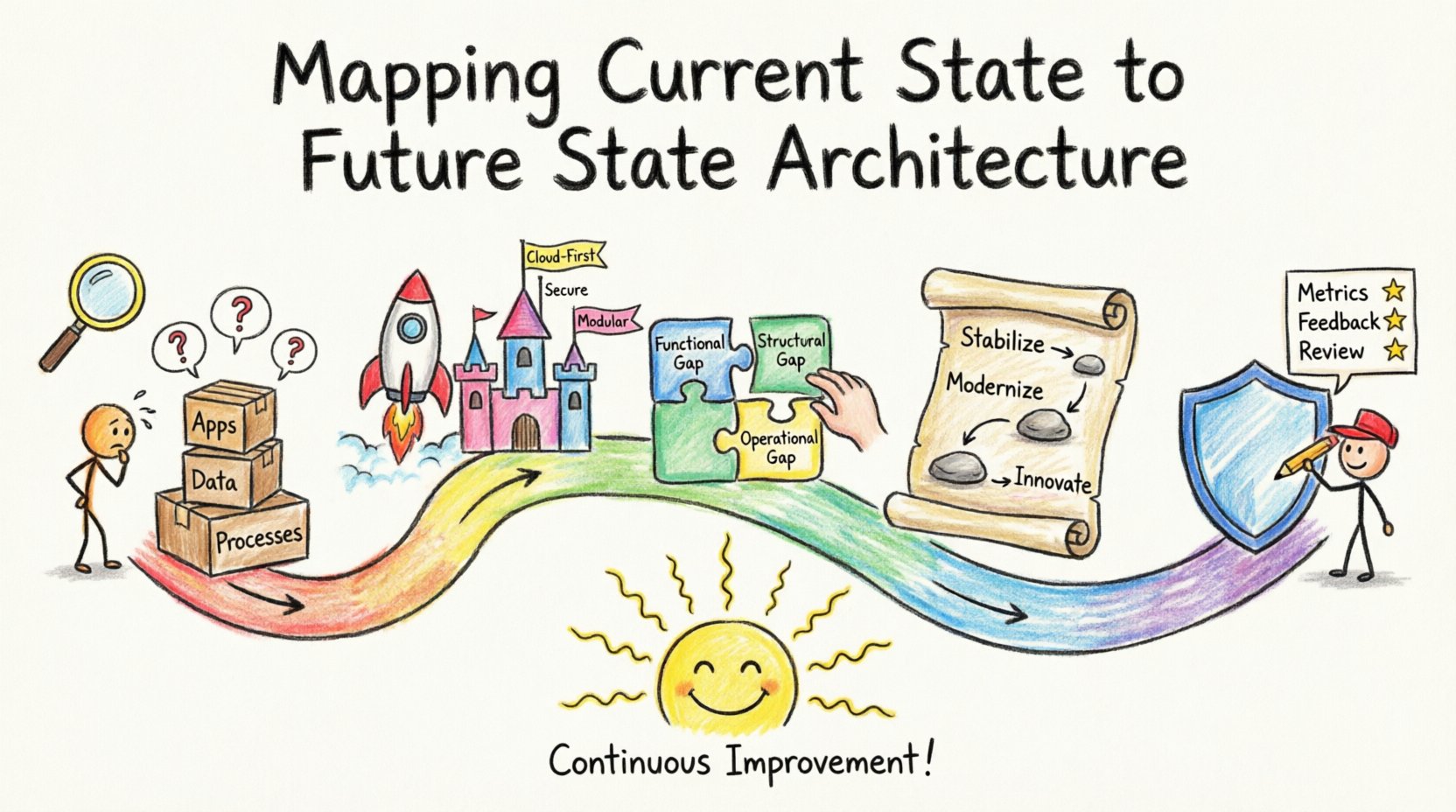
🔍 Phase 1: Understanding the Current State Architecture
The first step in any architectural transformation is to establish a truthful baseline. The “current state” refers to the aggregate of all technology assets, processes, data flows, and organizational structures that exist today. Many organizations struggle here because their documentation is outdated or scattered across multiple departments. A comprehensive current state assessment requires a holistic view.
Inventorying Technology Assets
Begin by cataloging every software application, hardware component, and cloud service in use. This inventory should go beyond a simple list. For each asset, you must determine:
- Lifecycle Stage: Is the application in active use, maintenance mode, or nearing end-of-life?
- Business Criticality: Which systems support core revenue-generating functions versus those that are auxiliary?
- Dependencies: How does this application interact with others? If one system fails, does it cascade to others?
- Ownership: Which business unit or department is responsible for the maintenance and funding of this asset?
Without this level of detail, the resulting architecture map will be incomplete. You cannot plan a future state if you do not know what you currently possess. Use a standardized taxonomy to categorize these assets, ensuring consistency across the enterprise.
Analyzing Process Flows
Technology does not exist in a vacuum. It supports business processes. Mapping the current state requires tracing how data moves through these processes. Identify bottlenecks where manual workarounds are common. These manual interventions often indicate a failure in the digital architecture or a gap between the system capabilities and the business reality.
- Handoff Points: Where does responsibility shift between systems or teams?
- Data Entry: Is the same data entered multiple times across different systems?
- Compliance: Do current processes meet regulatory requirements?
Identifying Pain Points
Engage with stakeholders to understand their frustrations. Common pain points include slow system performance, lack of integration between tools, or difficulty in accessing data. These qualitative insights are just as important as quantitative asset lists. They provide the context for why the future state needs to differ from the current one.
🚀 Phase 2: Defining the Future State Architecture
Once the baseline is established, the focus shifts to the “future state.” This is the target architecture that the organization aims to achieve. It should not be an abstract concept but a concrete design that supports specific business objectives. The future state architecture defines the ideal operating model.
Establishing Strategic Principles
Before designing the architecture, define the guiding principles. These principles dictate what is acceptable and what is not. Examples include:
- Cloud-First: All new development must leverage cloud-native capabilities.
- Standardization: Reduce the variety of tools by consolidating similar applications.
- Security by Design: Security controls must be embedded in the architecture, not added as an afterthought.
- Modularity: Systems should be built as independent, interchangeable components.
These principles act as a filter for all architectural decisions. If a proposed solution violates a principle, it must be rejected or the principle must be revisited.
Defining Target Capabilities
The future state is best understood in terms of capabilities rather than just software. A capability is the ability of an organization to achieve a specific outcome. For example, “Real-time Customer Analytics” is a capability, whereas “CRM System” is a tool used to achieve it. Focusing on capabilities ensures that the architecture remains flexible enough to accommodate new tools in the future.
- Business Capabilities: What can the business do? (e.g., Order Fulfillment, Risk Assessment)
- Application Capabilities: What functions must the software perform?
- Information Capabilities: How is data managed, secured, and accessed?
Visualizing the Target Design
Create visual representations of the future architecture. These diagrams should show high-level relationships between business units, processes, and technology layers. Avoid excessive detail at this stage; focus on the structure and flow. The goal is to communicate the vision to stakeholders who may not be technical experts.
📊 Phase 3: The Gap Analysis Process
Gap analysis is the bridge between the current state and the future state. It identifies the differences that must be addressed to move from the baseline to the target. This process is rigorous and requires cross-functional collaboration.
Categorizing the Gaps
Not all gaps are created equal. They generally fall into three categories:
- Functional Gaps: The current system lacks a feature required for the future state.
- Structural Gaps: The current architecture does not support the required scalability or integration patterns.
- Operational Gaps: The team lacks the skills or processes to maintain the future architecture.
Comparative Analysis Table
Using a structured table helps in visualizing the transition requirements clearly.
| Domain | Current State Characteristics | Future State Characteristics | Gap Type |
|---|---|---|---|
| Technology Stack | Mixed on-premise and legacy cloud | 100% Cloud-Native Microservices | Structural |
| Data Management | Decentralized silos | Centralized Data Lake with Governance | Functional |
| Security | Perimeter-based firewalls | Zero-Trust Architecture | Operational |
| Development | Waterfall methodology | Agile DevOps Pipeline | Operational |
Prioritizing the Gaps
You cannot fix every gap simultaneously. Resources are limited, so prioritization is essential. Use a scoring matrix that considers the impact on business value versus the cost and effort to resolve the gap.
- High Impact, Low Effort: These are “quick wins” and should be addressed first.
- High Impact, High Effort: These are strategic initiatives that require significant planning and funding.
- Low Impact, Low Effort: These can be handled as part of routine maintenance.
- Low Impact, High Effort: These are typically deferred or eliminated entirely.
🗺️ Phase 4: Building the Transition Roadmap
Once the gaps are identified and prioritized, the next step is to create a roadmap. This document outlines the sequence of changes required to reach the future state. It acts as a contract between the architecture team and the business leaders.
Defining Transition Architectures
Jumping directly from the current state to the future state is rarely feasible. It is often necessary to define intermediate “transition architectures.” These are stepping stones that allow the organization to gain value incrementally while working toward the final goal.
- Phase 1: Stabilization. Fix immediate issues and prepare the foundation.
- Phase 2: Modernization. Migrate legacy systems to modern platforms.
- Phase 3: Innovation. Leverage new capabilities to create competitive advantages.
Resource Allocation
A roadmap is useless without the resources to execute it. Identify the budget, personnel, and time required for each phase. Be realistic about the capacity of the IT team. Overloading the team with too many initiatives leads to burnout and project failure.
Risk Management
Every transformation carries risk. Identify potential points of failure. What happens if a migration fails? How do you ensure business continuity during the transition? Develop contingency plans for critical milestones.
🛡️ Phase 5: Governance and Continuous Improvement
The journey from current to future state does not end once the roadmap is executed. Architecture is a living discipline that requires ongoing governance to ensure the organization stays on course.
Architecture Review Boards
Establish a formal body responsible for reviewing proposed changes against the target architecture. This board ensures that new projects do not drift away from the strategic vision. They evaluate proposals for compliance with standards, security, and integration requirements.
Metrics and KPIs
You must measure the success of the transformation. Define key performance indicators that reflect both architectural health and business outcomes.
- System Availability: Percentage of uptime for critical services.
- Integration Health: Number of successful data exchanges between systems.
- Technical Debt: The cost of fixing legacy issues versus building new features.
- Time to Market: How quickly can the organization deploy new capabilities?
Feedback Loops
Create mechanisms for feedback from the operational teams. They are the ones interacting with the systems daily and will notice issues before anyone else. Regular review cycles allow the architecture to evolve as business needs change.
⚠️ Common Challenges in Architecture Mapping
Even with a solid plan, organizations face obstacles during the mapping process. Recognizing these challenges early allows for better mitigation strategies.
Data Accuracy
One of the most common issues is relying on outdated inventory data. Systems are added and removed constantly. If the current state map is wrong, the future state plan will be flawed. Implement automated discovery tools where possible to keep the inventory fresh.
Stakeholder Resistance
Architectural changes often disrupt established workflows. Department heads may resist changes that require them to adopt new tools or change processes. Engage stakeholders early and explain the benefits of the future state in terms of their specific goals.
Scope Creep
As the project progresses, the desire to add more features or capabilities can expand the scope beyond the original budget and timeline. Maintain strict control over the requirements and ensure every change goes through the governance process.
Alignment with Business Strategy
Architecture teams sometimes become too focused on technology and lose sight of business strategy. Regularly validate that the architectural goals align with the organization’s strategic plan. If the business pivots, the architecture must pivot with it.
📈 Conclusion and Next Steps
Mapping the current state to the future state is a complex but necessary endeavor for any organization seeking long-term growth and efficiency. It requires a disciplined approach to inventory, analysis, and planning. By following the structured phases outlined in this guide, organizations can reduce risk and ensure that their technology investments drive tangible business value.
Start by auditing your current landscape. Define your principles. Identify the gaps. Build your roadmap. Govern your changes. This cycle of continuous improvement ensures that your enterprise architecture remains relevant and robust in a changing market environment. The journey is ongoing, but the destination is a more agile and resilient organization.
Remember that architecture is not just about diagrams and documents. It is about enabling the business to operate effectively. Keep the focus on value delivery and maintain open communication with all stakeholders involved in the transformation.
Related posts:
 The Beginner’s Guide to Enterprise Architecture: A Definitive Overview
 Enterprise Architecture Explained: A Step-by-Step Quick Start for New Architects
 Business, Data, and Technology: Breaking Down the Core Components of Enterprise Architecture
 Solution Architect’s Checklist: Essential Steps Before Starting Your First EA Project