


Establishing a clear direction for technology and business alignment is a critical responsibility for any enterprise. An architecture roadmap serves as the bridge between strategic intent and technical execution. It defines the path forward, ensuring that investments in systems, data, and processes deliver measurable value. This guide outlines a structured approach to developing an initial architecture roadmap within a thirty-day window. The focus remains on practical steps, stakeholder engagement, and tangible deliverables without relying on specific vendor tools.
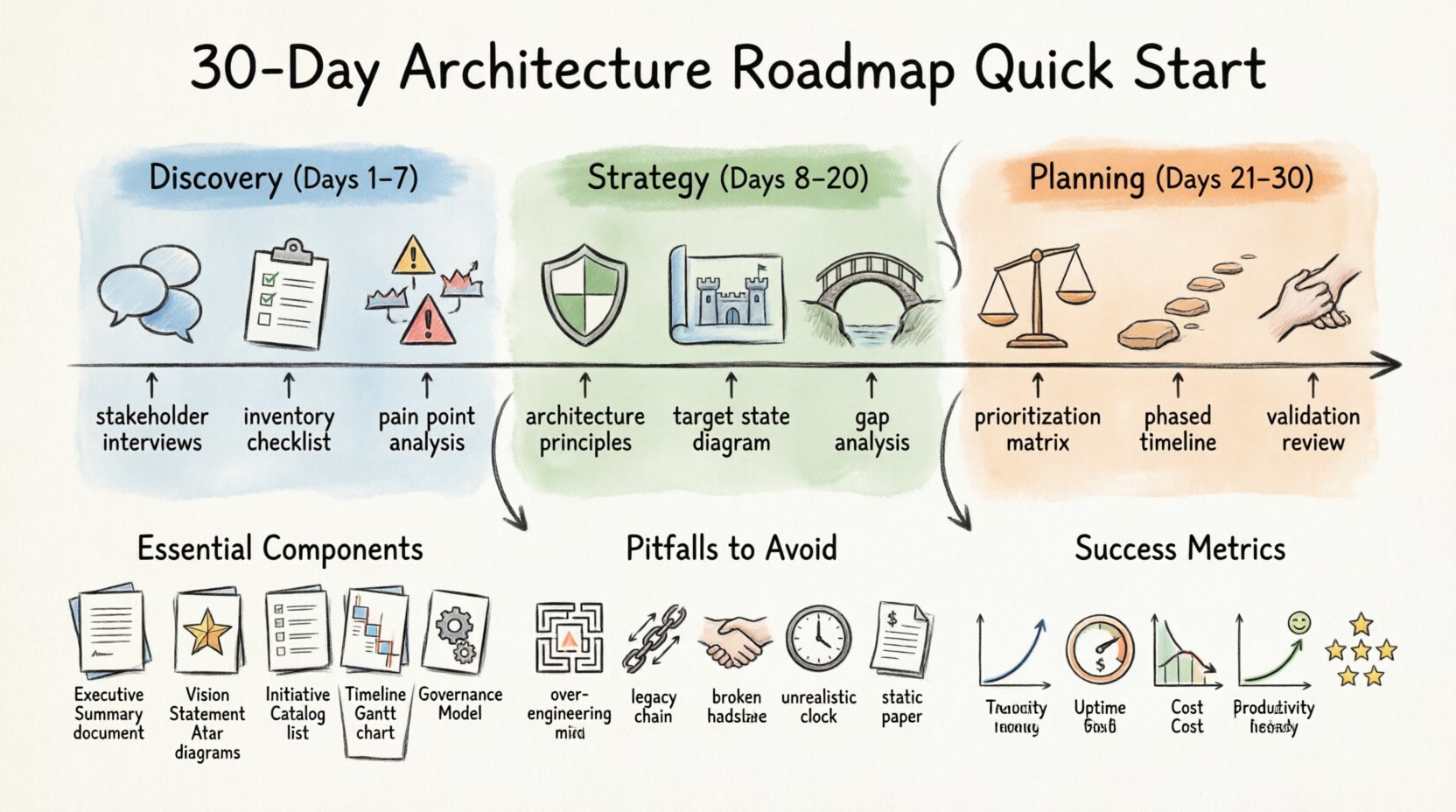
Why a 30-Day Sprint? 🚀
Long-term planning is essential, but it often lacks urgency. A thirty-day sprint forces clarity. It requires teams to identify the most critical gaps and prioritize actions that yield immediate momentum. This timeframe is sufficient to gather necessary data, define principles, and draft a high-level plan without getting bogged down in excessive detail. The goal is to produce a working document that can be reviewed and refined, rather than a perfect theoretical model.
Phase 1: Discovery and Current State Assessment (Days 1-7) 📋
The foundation of any roadmap is an accurate understanding of the present environment. Without this baseline, planning becomes speculation. During the first week, the focus is on information gathering and stakeholder interviews.
1. Stakeholder Interviews
Engage with business leaders, technical leads, and operations teams. The objective is to understand pain points and strategic goals. Key questions include:
- What are the primary business objectives for the next fiscal year?
- Which systems are causing the most friction or downtime?
- Where do you see the greatest opportunities for efficiency?
- What technical debt is hindering current delivery speeds?
Documenting these insights creates a shared context. It ensures the roadmap addresses actual business needs rather than perceived ones.
2. Inventory of Existing Assets
Compile a comprehensive list of current applications, data stores, and infrastructure components. This inventory should include:
- Application Portfolio: List all software systems in use.
- Technology Stack: Identify programming languages, databases, and middleware.
- Integration Points: Map how systems communicate with one another.
- Compliance Status: Note any regulatory constraints or security requirements.
This data does not need to be perfect initially. The goal is to have a representative view of the landscape. Use existing documentation where available, but verify details through direct conversation with system owners.
3. Identify Pain Points
Analyze the inventory against the feedback from stakeholders. Highlight areas where technology is failing to support business goals. Common issues include:
- Redundant systems performing the same function.
- Outdated platforms that are difficult to maintain.
- Lack of data visibility across departments.
- Security vulnerabilities in legacy components.
These pain points become the primary drivers for the roadmap initiatives.
Phase 2: Strategy and Target State Definition (Days 8-20) 🎯
With the current state understood, the team can define where the organization needs to go. This phase involves setting principles and designing the target architecture.
1. Establish Architecture Principles
Principles act as guardrails for decision-making. They should be concise and actionable. Examples include:
- Cloud First: New services should be hosted in the cloud unless compliance dictates otherwise.
- Data Ownership: Data must be owned by the business function that generates it.
- Interoperability: Systems must expose APIs for integration.
- Security by Design: Security controls are implemented during the design phase, not added later.
These principles guide the selection of solutions and the rejection of options that do not align with the strategy.
2. Define the Target State
Describe the ideal future environment. This does not mean every detail must be specified, but the high-level capabilities should be clear. Consider:
- Capabilities: What functions must the business support?
- Performance: What are the required response times and availability levels?
- Scalability: How should the system handle growth in users or data volume?
- Cost Efficiency: What is the target operating model for cost management?
Visualizing this state helps stakeholders understand the destination. Use diagrams to illustrate the flow of data and the interaction between components.
3. Gap Analysis
Compare the current state inventory with the target state definition. Identify the gaps that must be closed to move from point A to point B. Categorize these gaps into:
- Functional Gaps: Missing features or capabilities.
- Technical Gaps: Outdated hardware or software.
- Process Gaps: Missing workflows or governance procedures.
Each gap represents a potential initiative. Prioritize them based on business impact and technical feasibility.
Phase 3: Planning and Validation (Days 21-30) 📅
The final week is dedicated to organizing initiatives into a timeline and validating the plan with key decision-makers.
1. Prioritization Framework
Not all initiatives can happen at once. Use a framework to rank them. Consider:
- Business Value: How much revenue or efficiency does this generate?
- Risk Reduction: Does this lower security or operational risk?
- Dependency: Does this need to happen before other projects start?
- Cost: What is the estimated investment required?
A simple scoring matrix can help objectively rank initiatives. This reduces subjectivity in the planning process.
2. Phasing and Timeline
Group initiatives into logical phases. A common structure includes:
- Foundation: Immediate fixes to stabilize the environment.
- Enablement: Projects that unlock new capabilities.
- Optimization: Long-term improvements for efficiency.
Assign rough timeframes to each phase. This provides a sense of duration without committing to specific dates too early.
3. Validation and Review
Present the draft roadmap to leadership and technical teams. Gather feedback on feasibility and alignment. Key areas to address during the review include:
- Are the resources available to execute the plan?
- Does the timeline align with the business calendar?
- Are the risks identified and mitigated?
Iterate on the document based on this feedback. The final version should be signed off by the relevant stakeholders.
Architecture Roadmap Schedule Overview 📊
The following table summarizes the activities for each week of the thirty-day period.
| Week | Focus Area | Key Activities | Deliverable |
|---|---|---|---|
| Week 1 | Discovery | Interviews, Inventory, Pain Point Analysis | Current State Assessment Report |
| Week 2 | Principles & Strategy | Define Principles, Set Goals, Draft Target State | Architecture Principles Document |
| Week 3 | Gap & Initiative Planning | Gap Analysis, Initiative Identification, Prioritization | Initiative Backlog |
| Week 4 | Validation & Finalization | Timeline Creation, Review, Sign-off | Final Architecture Roadmap |
Essential Components of the Roadmap 🧩
A robust roadmap contains specific elements that make it actionable and clear. Ensure the final document includes the following sections.
- Executive Summary: A high-level overview for leadership, highlighting strategic goals and expected outcomes.
- Vision Statement: A concise description of the future state and the value it delivers.
- Current vs. Target State Diagrams: Visual representations of the before and after scenarios.
- Initiative Catalog: A list of projects with descriptions, owners, and estimated costs.
- Timeline Visualization: A Gantt-style view or phased chart showing the sequence of work.
- Governance Model: Rules for how decisions are made and how changes to the roadmap are managed.
Table: Roadmap Component Breakdown
| Component | Purpose | Frequency of Update |
|---|---|---|
| Executive Summary | Communicates value to stakeholders | Quarterly |
| Vision Statement | Defines long-term direction | Annually |
| Initiative Catalog | Tracks specific projects and status | Monthly |
| Timeline Visualization | Shows progress and milestones | Monthly |
| Governance Model | Defines decision-making authority | As needed |
Common Pitfalls to Avoid ⚠️
Even with a structured plan, errors can occur during the creation of an architecture roadmap. Being aware of common mistakes helps mitigate risks.
1. Over-Engineering the Plan
A thirty-day sprint is not the time for exhaustive detail. Trying to design every micro-service or database schema will delay the process. Focus on the major components and high-level flows. Details can be refined during project initiation.
2. Ignoring Legacy Constraints
It is tempting to assume a clean slate. However, legacy systems often dictate the pace of change. Acknowledge the limitations of existing infrastructure and plan for gradual migration rather than immediate replacement.
3. Lack of Stakeholder Buy-in
If business leaders do not understand or agree with the roadmap, it will fail. Involve them early and often. Ensure they see how technical decisions support their specific business goals.
4. Unrealistic Timelines
Committing to aggressive delivery dates can lead to burnout and technical debt. Build in buffer time for unexpected challenges. A realistic plan that is delivered on time is better than an ambitious plan that is delayed.
5. Static Documentation
An architecture roadmap is not a one-time document. Technology and business needs evolve. Establish a process for reviewing and updating the roadmap regularly. Treat it as a living document.
Measuring Success 📈
To determine if the roadmap is effective, establish metrics that track progress and value. These indicators should align with the initial business objectives.
- Delivery Velocity: Measure how quickly initiatives move from planning to production.
- System Availability: Track uptime and reliability improvements over time.
- Cost Reduction: Monitor operational costs and infrastructure spend.
- Developer Productivity: Assess how much time developers spend on maintenance versus feature work.
- Stakeholder Satisfaction: Gather feedback from business leaders on the alignment of technology with their needs.
Regularly review these metrics to ensure the roadmap remains on track. If metrics indicate deviation, adjust the plan accordingly.
Final Thoughts on Implementation 💡
Creating an architecture roadmap in thirty days is an ambitious but achievable goal. It requires discipline, clear communication, and a focus on high-impact activities. By following this structured approach, organizations can establish a clear path forward that aligns technology with business strategy.
The value of this process extends beyond the document itself. It fosters collaboration, clarifies priorities, and sets a foundation for future growth. Remember that the roadmap is a tool for guidance, not a rigid contract. Flexibility is key to adapting to changing conditions.
Start the discovery phase today. Engage your team. Define the principles. Build the plan. The path to a robust architecture begins with a single step.