

Enterprise Architecture (EA) serves as the strategic blueprint for an organization’s IT landscape and business processes. For those starting their journey in this field, the task of documenting complex systems can seem overwhelming. However, structured documentation is the backbone of effective communication and decision-making. This guide outlines essential practices to help you build a solid foundation for enterprise architecture documentation.
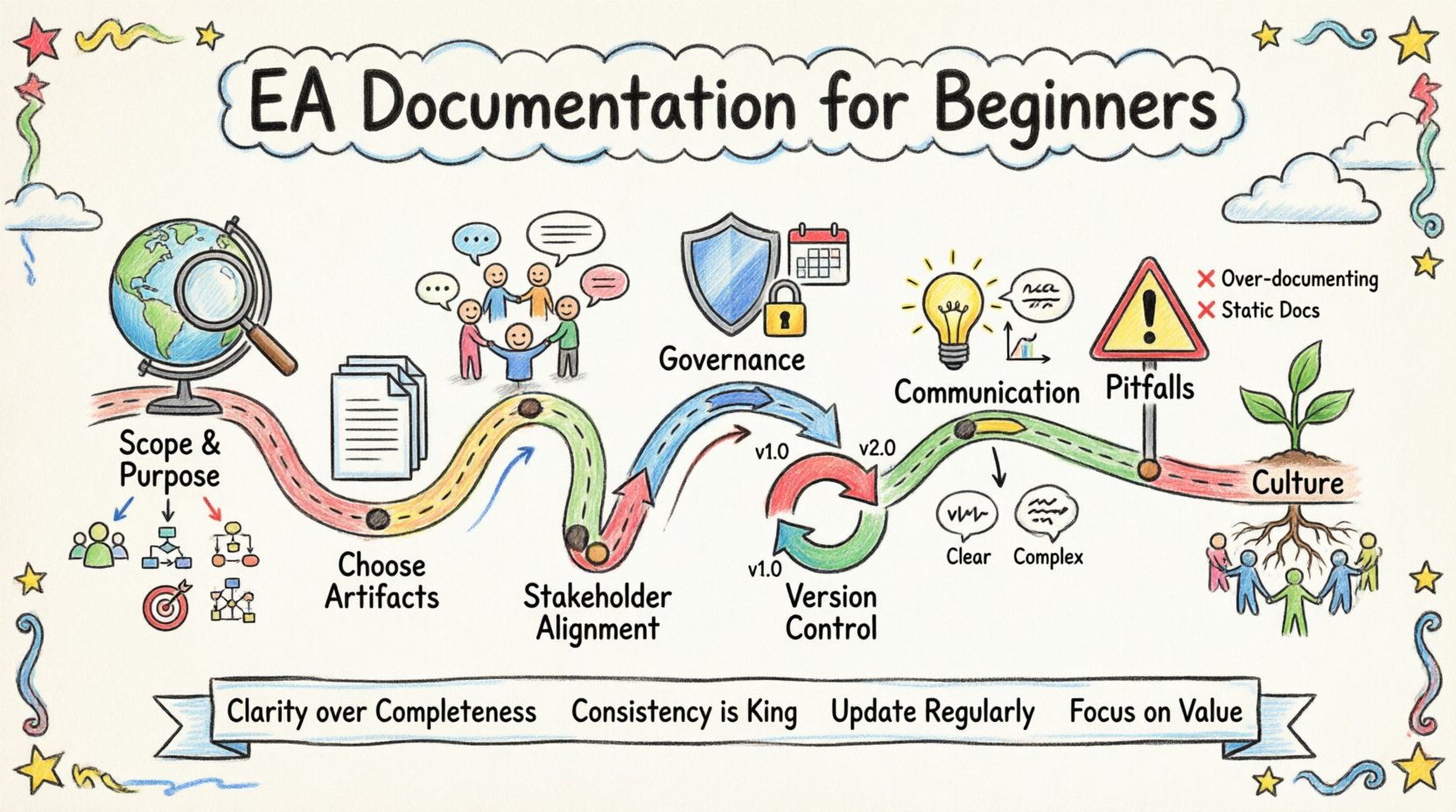
Understanding the Scope and Purpose 🌍
Before creating any diagrams or documents, it is vital to understand why you are documenting. Documentation is not just about record-keeping; it is about enabling understanding. A clear purpose ensures that your efforts align with organizational goals.
Define the Audience: Who will read this? Is it for technical teams, executives, or external auditors? Tailor the language and detail level accordingly.
Identify the Goal: Are you documenting for compliance, migration planning, or general knowledge retention? Each goal requires a different approach.
Set Boundaries: Decide what is in scope and what is out of scope. Trying to document everything at once often leads to incomplete or outdated information.
Without a defined purpose, documentation becomes a chore rather than a strategic asset. Start small and expand as confidence grows.
Choosing the Right Artifacts 📊
Documentation in EA comes in various forms. Selecting the appropriate artifacts ensures that the information is accessible and useful. Below is a breakdown of common artifacts and their primary functions.
Artifact Type | Purpose | Best Used For |
|---|---|---|
Process Maps | Visualize workflows and steps | Operational efficiency analysis |
System Diagrams | Illustrate technical connections | Infrastructure planning |
Application Portfolios | List software assets | Licensing and maintenance tracking |
Data Models | Define data relationships | Database design and governance |
Strategy Maps | Link business goals to IT | Executive reporting and alignment |
Do not feel pressured to create every type of artifact immediately. Focus on the ones that solve immediate business problems.
Stakeholder Alignment 👥
Documentation often fails because it is created in isolation. Engaging stakeholders early ensures that the documentation reflects reality and meets user needs.
Interview Subject Matter Experts: Talk to the people who manage the systems. They hold the tacit knowledge that is not written down anywhere.
Validate Information: Never assume accuracy. Have stakeholders review drafts to confirm correctness.
Manage Expectations: Clearly communicate how often documentation will be updated. This prevents frustration when changes occur.
Seek Feedback Loops: Create channels for stakeholders to report errors or request changes.
Building trust with stakeholders makes them more likely to maintain their own inputs, reducing the burden on the architecture team.
Governance and Maintenance 🛡️
A document that is not maintained becomes obsolete quickly. Governance provides the rules and processes to keep information current.
Establish Review Cycles: Schedule regular reviews, such as quarterly or bi-annually, to check for accuracy.
Define Ownership: Assign specific individuals to own specific sections. This ensures accountability.
Standardize Naming Conventions: Use consistent naming for files, diagrams, and repositories. This aids in searchability.
Control Access: Determine who can view or edit documents. Sensitive architectural data should not be open to all.
Governance is not about restriction; it is about ensuring quality and reliability over time.
Version Control Strategies 🔄
Changes happen constantly in any environment. Managing versions prevents confusion about which document represents the current state.
Use Version Numbers: Adopt a simple system like v1.0, v1.1, v2.0 to indicate major and minor changes.
Maintain a Change Log: Document what changed, when, and why for every version update.
Archive Old Versions: Keep historical versions accessible for auditing or reference, but clearly distinguish them from the current release.
Link to Change Requests: If possible, tie documentation updates to specific project change requests.
Effective version control allows teams to revert to previous states if a new change causes issues.
Communication Techniques 🗣️
How you present information is just as important as the information itself. Clear communication reduces the risk of misinterpretation.
Use Standard Notation: Adopt industry-standard symbols for diagrams so that others can read them without a legend.
Keep it Simple: Avoid overly complex visuals. If a diagram is hard to understand, simplify it.
Provide Context: Always include a brief introduction explaining the document’s intent and scope.
Use Visual Hierarchy: Use bolding, headings, and spacing to guide the reader’s eye to key information.
Great documentation speaks clearly without requiring constant explanation from an architect.
Common Pitfalls to Avoid ⚠️
Even experienced practitioners can stumble into common traps. Being aware of these pitfalls helps you navigate the process more smoothly.
Over-Documenting: Creating unnecessary detail can obscure the big picture. Focus on what is critical.
Under-Documenting: Skipping details that are needed for implementation can lead to project delays.
Static Documentation: Creating documents that are never updated renders them useless quickly.
Lack of Standards: Inconsistent formatting across documents makes the repository difficult to navigate.
Ignoring the Business: Focusing solely on technology without linking it to business value reduces relevance.
Avoiding these issues ensures your documentation remains a valuable tool rather than a burden.
Building a Culture of Documentation 🌱
Documentation should not be the responsibility of a single individual. Integrating it into the team culture ensures sustainability.
Lead by Example: Demonstrate the value of good documentation in your own work.
Provide Training: Offer workshops or resources to help team members improve their writing and diagramming skills.
Recognize Effort: Acknowledge contributions to documentation in performance reviews or team meetings.
Automate Where Possible: Use tools that can extract data automatically from systems to reduce manual entry.
When documentation is seen as a shared responsibility, the quality and quantity of information improve naturally.
Final Thoughts on EA Documentation 🏁
Documenting Enterprise Architecture is a continuous journey. It requires patience, attention to detail, and a commitment to clarity. By following these best practices, you can create a repository that supports your organization’s growth and stability.
Start with clear goals and audience definitions.
Select artifacts that provide the most value.
Engage stakeholders throughout the process.
Implement governance to maintain accuracy.
Manage versions to track changes effectively.
Communicate visually and simply.
Learn from common pitfalls to refine your approach.
Foster a culture where documentation is valued.
Remember, the goal is not perfection. The goal is utility. If your documentation helps people make better decisions, it is serving its purpose. As you gain experience, you will find your own rhythm and style that works best for your specific environment.
Key Takeaways for Beginners 🎯
To summarize the core principles for those just starting out:
Clarity over Completeness: It is better to have clear, partial information than confusing, complete information.
Consistency is King: Stick to your templates and standards once you establish them.
Update Regularly: Treat documentation as living information, not a one-time task.
Focus on Value: Always ask how this document helps the business or the technical team.
By adhering to these principles, you lay a strong groundwork for a successful Enterprise Architecture practice. Your work will become a critical asset for the organization, facilitating smoother transitions and clearer strategic alignment.